
For most of my life, closing my eyes during prayer or meditation meant exactly what I expected it to mean: darkness. Sometimes my thoughts wandered. Sometimes I experienced moments of profound stillness. Occasionally a memory would drift through my mind before dissolving back into silence. Yet the visual landscape behind my closed eyes remained largely uneventful.
Then, something changed.
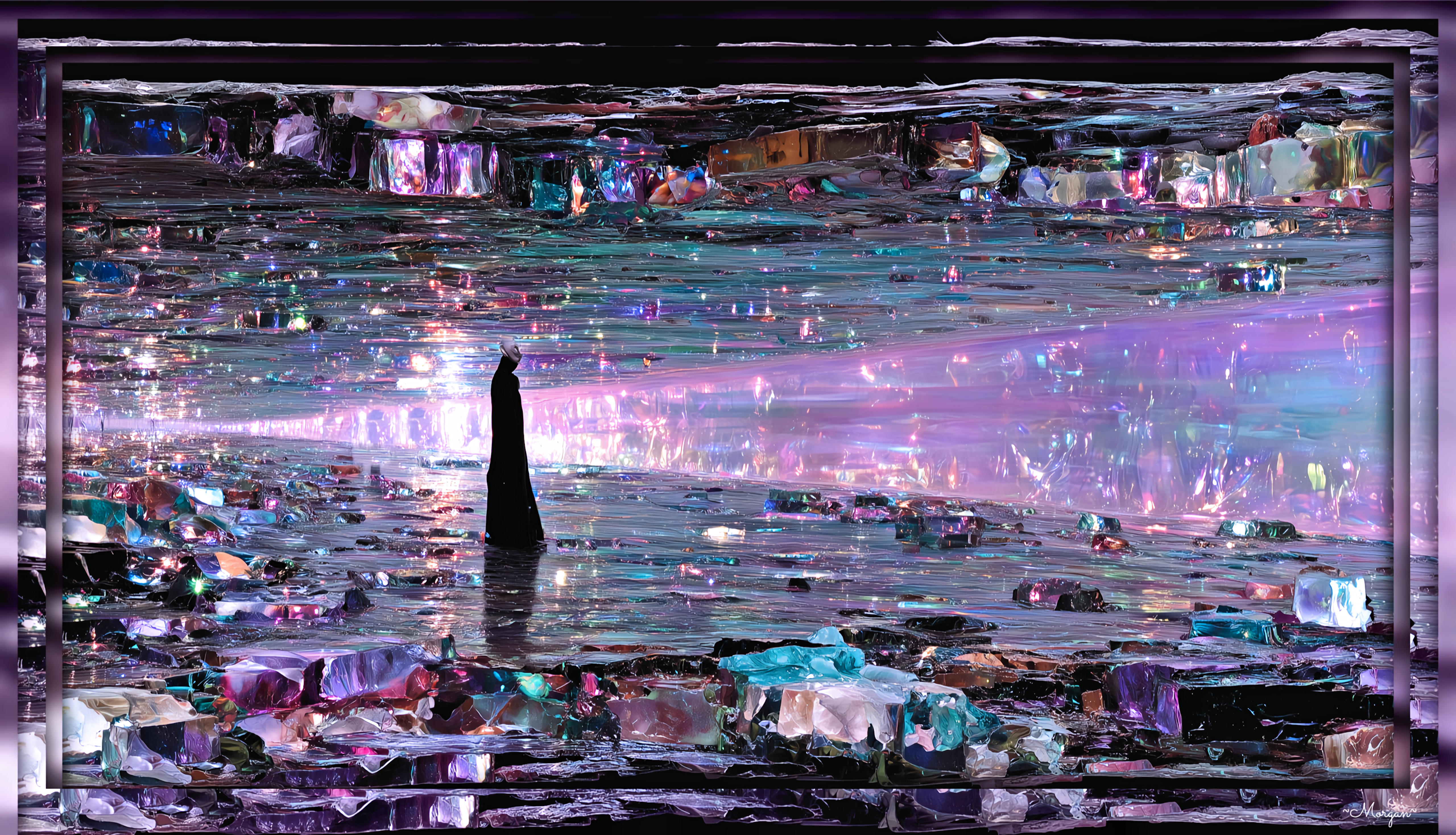
Over the past six to eight months, I began noticing vivid colors emerging as I settled into quiet contemplation. At first they appeared as flowing fields of deep blue, gently shifting like watercolor carried by an unseen current. Other evenings they blossomed into rich purples or soft greens, moving with an almost liquid quality that reminded me of acrylic fluid art. As someone who recently discovered a passion for fluid painting, I couldn’t help noticing the similarity. It was as though the same graceful movement I watched unfold across my canvases had somehow found its way into my inner world.
Then one evening, the experience became even more unexpected.
Instead of flowing colors, I saw a long horizontal row of luminous orange squares with complex geometric shapes within, suspended against the darkness. The geometry was unlike anything I had experienced before. It was clear, structured, and remarkably vivid. Naturally, my curiosity was awakened.
What exactly was I seeing?
Was this simply a fascinating feature of the human brain? Was it something that had always been there, only now becoming noticeable through deeper relaxation? Or had contemplative traditions been describing experiences like these for centuries?
Rather than looking for a single answer, I decided to explore the question from several different perspectives.
When Science and Spirituality Meet
One of the things I have come to appreciate over the years is that science and spirituality do not always have to compete with one another. Sometimes they simply ask different questions.
Neuroscience tells us that many people experience colors, lights, and geometric patterns while their eyes are closed. These visual phenomena are often attributed to spontaneous activity within the retina and the visual cortex, particularly as the mind relaxes and external sensory input decreases. In scientific language, these experiences are often called phosphenes.
From that perspective, there is nothing particularly mysterious about seeing light behind closed eyes.
Yet contemplative traditions throughout history have often interpreted these same experiences quite differently. Rather than dismissing them as meaningless, they have viewed them as possible signs accompanying deeper states of meditation, prayer, or inner awareness.
These perspectives are not necessarily incompatible. One attempts to explain the biological mechanism. The other explores the possible significance of the experience within a person’s spiritual life.
Perhaps both have something valuable to teach us.
The Third Eye and the Yogic Tradition
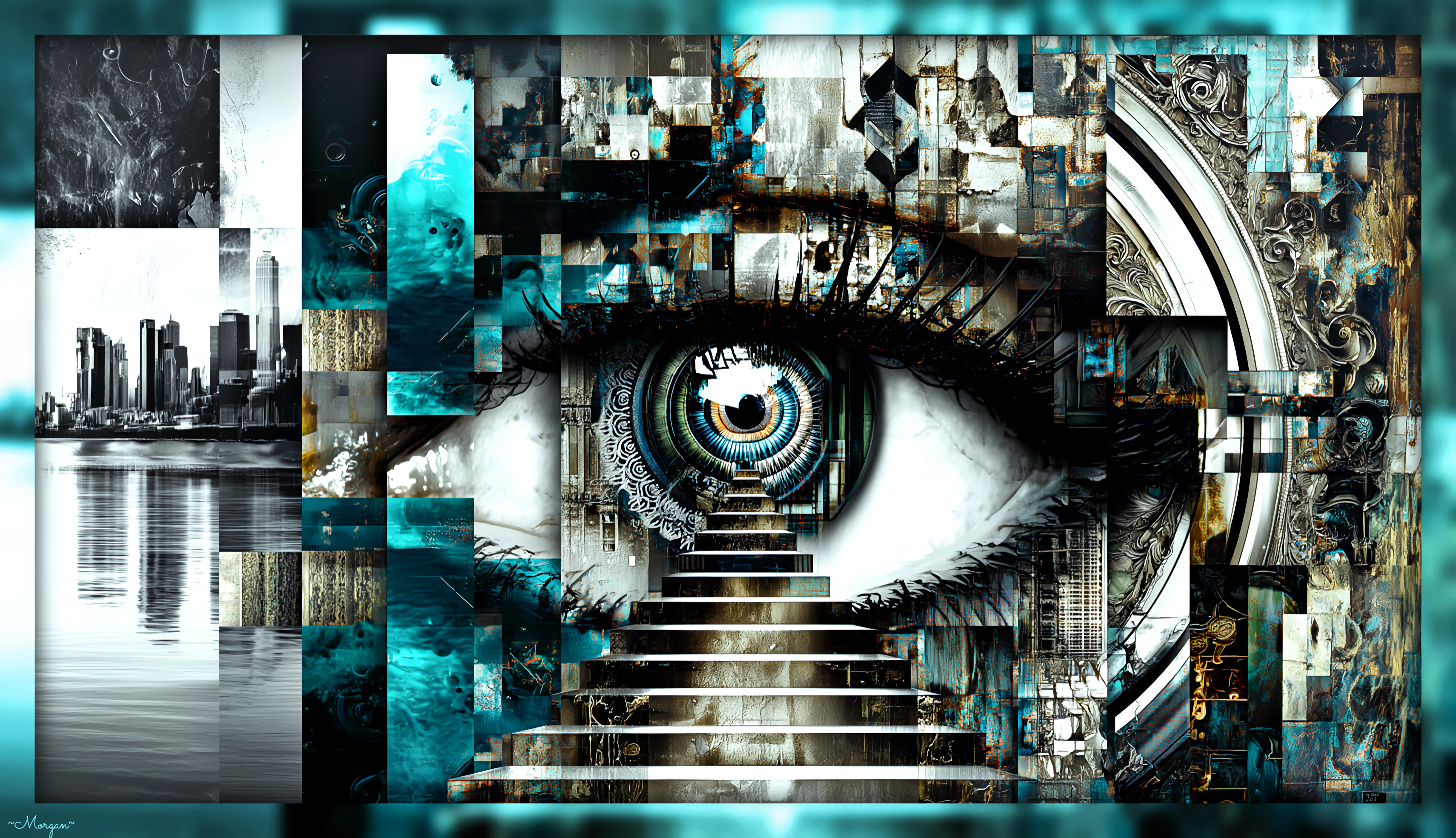
Many people immediately associate inner light and color with what is commonly called the Third Eye. In yogic philosophy, this refers to the Ajna Chakra, traditionally associated with intuition, insight, discernment, and expanded awareness.
Modern discussions often describe the Third Eye as though it grants extraordinary psychic abilities, yet the ancient teachings present a much more nuanced picture. The emphasis is less about acquiring supernatural powers and more about cultivating clearer perception. The Third Eye symbolizes learning to see beyond immediate appearances into deeper truths about ourselves and the world around us.
Many practitioners report experiencing indigo, violet, or blue light during meditation, colors traditionally associated with this center of awareness. What fascinated me most during my research, however, was not the descriptions of the colors themselves, but the advice given by experienced teachers.
Rather than encouraging students to chase these visions, they simply encouraged them to notice the experience with gratitude and then return their attention to meditation. The lights were never considered the goal. The transformation of consciousness remained the true purpose of the practice.
The Buddhist Perspective on Inner Light
Many Buddhist meditation traditions describe experiences known as nimitta, often translated as “mental signs.” As concentration deepens, practitioners sometimes report seeing radiant light, colors, stars, mist, or geometric forms emerging within the field of awareness.
Here again, the emphasis is remarkably balanced.
The appearance of these experiences is neither celebrated nor dismissed. They are simply recognized as phenomena that sometimes accompany deep concentration. Rather than becoming fascinated by the lights themselves, practitioners are encouraged to continue cultivating wisdom, compassion, mindfulness, and equanimity.
The experience may come, and it may go. Neither outcome is considered more spiritually significant than the qualities being developed within the heart.
Christian Mysticism and the Language of Light
Although Christian mysticism does not speak in terms of chakras, it contains its own rich tradition of inner illumination. Throughout history, mystics such as Hildegard of Bingen, Symeon the New Theologian, and Gregory Palamas described profound encounters with divine light during prayer.
Interestingly, these writers rarely focused on cataloging colors or interpreting visual experiences. Instead, they asked a much deeper question.
Did the experience make the individual more loving? More humble? More compassionate?
Within Christian mysticism, the authenticity of a spiritual experience is measured less by what one sees and far more by the transformation it produces. I find something deeply grounding in that perspective.
The Symbolism of Color
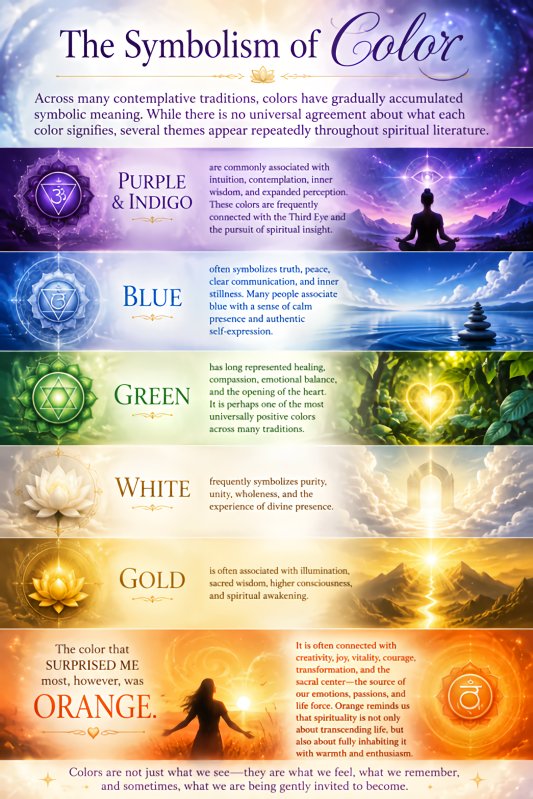
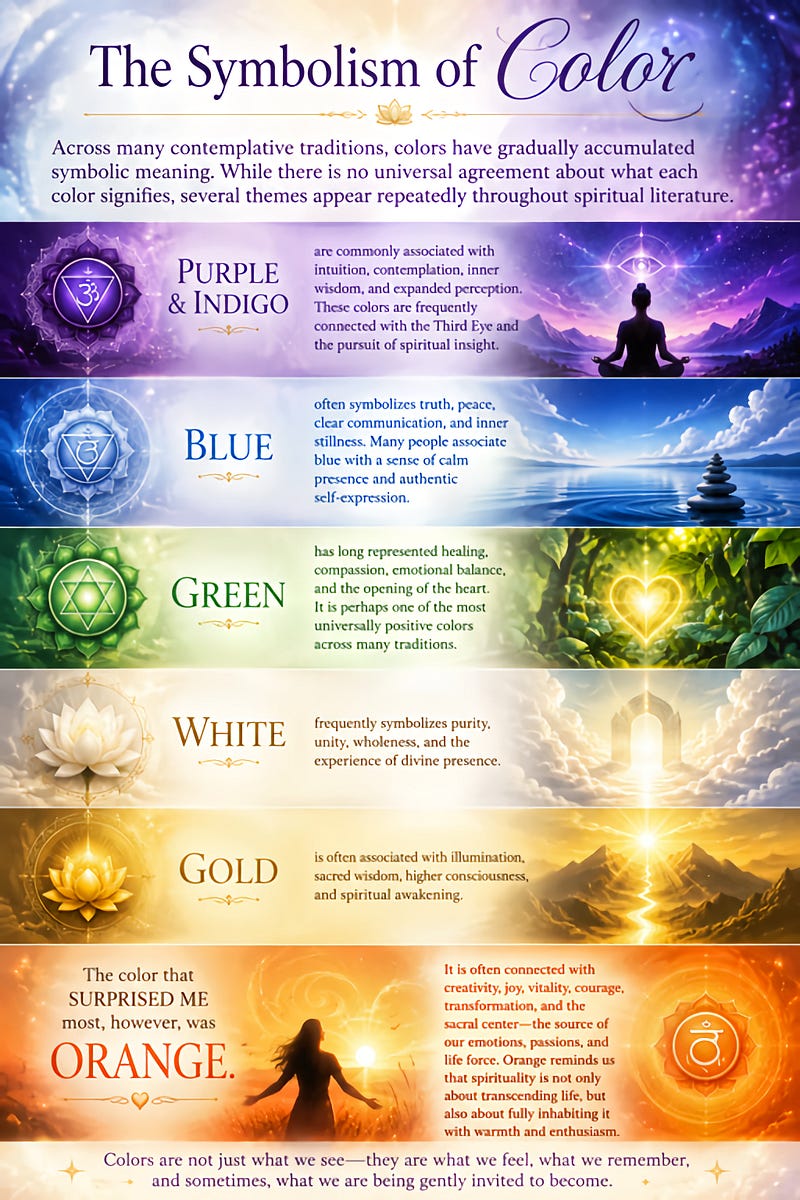
Across many contemplative traditions, colors have gradually accumulated symbolic meaning. While there is no universal agreement about what each color signifies, several themes appear repeatedly throughout spiritual literature.
Purple and indigo are commonly associated with intuition, contemplation, inner wisdom, and expanded perception. These colors are frequently connected with the Third Eye and the pursuit of spiritual insight.
Blue often symbolizes truth, peace, clear communication, and inner stillness. Many people associate blue with a sense of calm presence and authentic self-expression.
Green has long represented healing, compassion, emotional balance, and the opening of the heart. It is perhaps one of the most universally positive colors across many traditions.
White frequently symbolizes purity, unity, wholeness, and the experience of divine presence.
Gold is often associated with illumination, sacred wisdom, higher consciousness, and spiritual awakening.
The color that surprised me most, however, was orange.
The Meaning of Orange
Until recently, my own experiences had consisted almost entirely of blues, purples, and greens. Then one evening, those colors were replaced by a vivid row of orange geometric forms.
Within the yogic tradition, orange is most commonly associated with the Sacral Chakra, representing creativity, emotional flow, imagination, joy, and the birth of new possibilities.
As I reflected on the previous several months of my own life, I couldn’t help noticing how deeply creativity had become woven into my daily experience. Alongside writing, I had fallen in love with acrylic fluid art, begun building Dream Mythos Studios, explored entirely new artistic mediums, and found myself creating with a sense of freedom I had never experienced before.
Did the orange squares represent creativity?
I honestly don’t know. Maybe, maybe not, but I found the symbolism beautiful nonetheless. Sometimes a symbol does not have to be objectively true to become personally meaningful.
Living with Curiosity Instead of Certainty
One of the greatest lessons this experience has taught me has very little to do with colors. It has taught me to become comfortable with mystery.
Our culture often encourages us to explain everything immediately. We want definitive answers, clear conclusions, and confident certainty. Yet some experiences seem to invite a different response.
Whether these colors arise entirely through neurological processes, reflect deeper states of meditation, carry spiritual symbolism, or represent some combination of all three, I find myself less interested in proving one explanation over another.
Instead, I have become more interested in the effect they have upon my life.
Do they leave me more peaceful? More present? More compassionate? More grateful?
If the answer is yes, then perhaps that matters more than fully understanding their origin.
A Gentle Practice for Exploring Your Own Experience
If you spend time in prayer, meditation, or quiet contemplation, you may never experience colors behind your closed eyes. Or perhaps you already have and simply dismissed them without much thought.
The next time you settle into stillness, allow yourself to become quietly observant without expectation. If colors, light, or patterns appear, simply notice them. There is no need to assign immediate meaning or search for hidden messages.
When your practice is complete, spend a few moments reflecting on three gentle questions.
What did I notice?
How did the experience leave me feeling?
Did this time of quiet help me become more present, more peaceful, more compassionate, or more grateful?
These questions gently shift our attention away from extraordinary experiences and back toward the quiet transformation of everyday life. Over time, you may begin to notice patterns that are deeply personal, not because someone else told you what they should mean, but because your own experience begins to reveal its unique rhythm.
Final Reflections
I still do not know exactly why these colors began appearing only within the past several months. Perhaps future research will offer new scientific insights. Perhaps continued contemplation will deepen my own understanding. Or perhaps the mystery itself is part of the gift.
For now, I have chosen to hold the experience with curiosity rather than certainty. Because sometimes the greatest discoveries are not the answers we find. Sometimes they are the questions that quietly invite us to keep growing. And perhaps, every now and then, those questions arrive painted in light.

Subscribe to my YouTube Channel Dream Mythos Studios
Find my artwork On DeviantArt
Subscribe to my Newsletter
Follow on TikTok
~Morgan~

