

The world feels loud right now.
Not just in sound, but in signal—in the endless reactions, fractured attention, and urgency without direction we encounter every day. We’re told to respond faster, speak louder, take stronger positions. And yet, the more noise we create, the less meaningful change seems to take root.
But what if reactivity isn’t the answer?
What if calm is the most radical response we can offer?
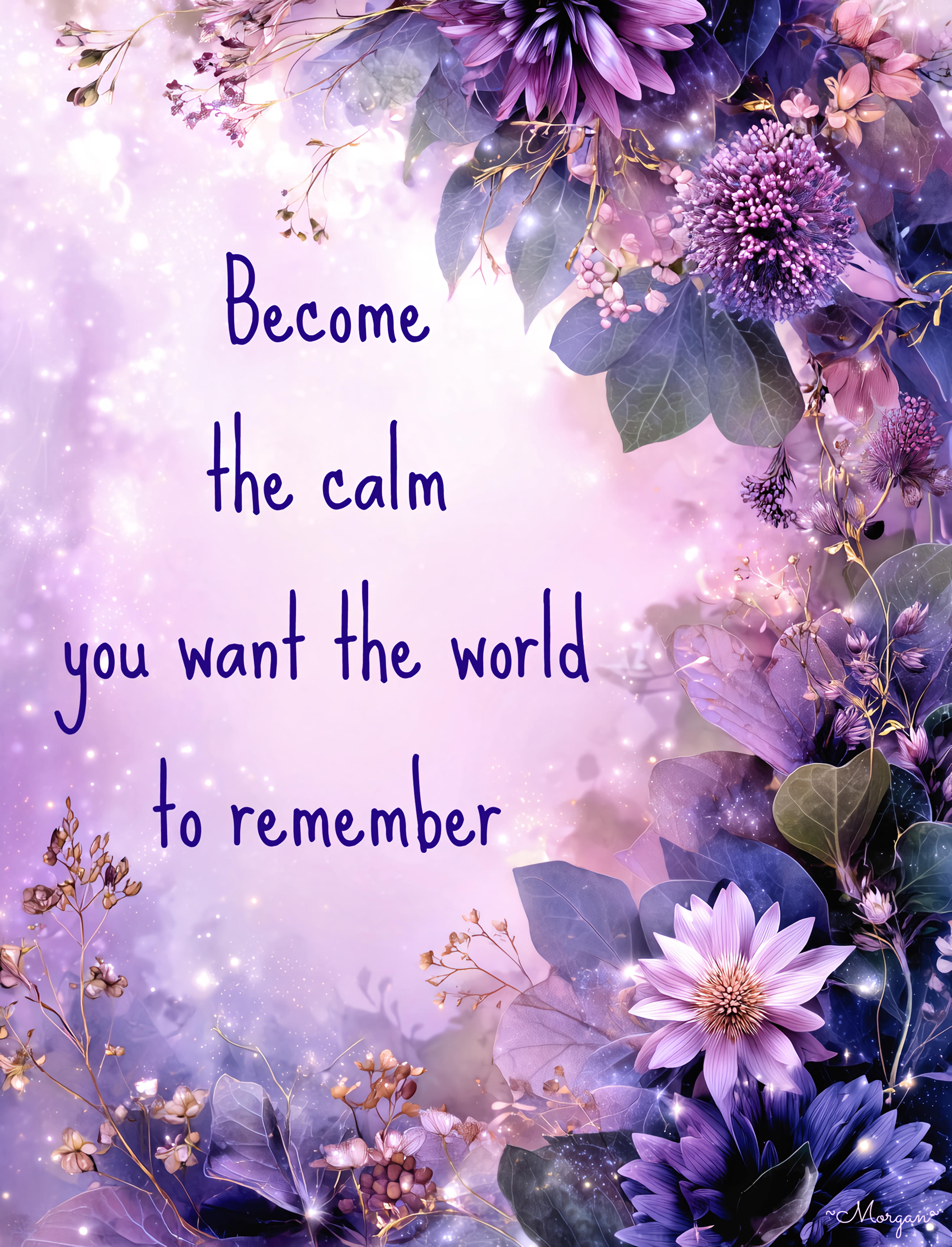
“Become the calm you wish the world would remember.”
This is not a passive idea. It isn’t about disengaging, spiritual bypassing, or pretending everything is fine. Choosing calm over reaction is a conscious act—choosing presence over panic, coherence over chaos, embodiment over performance.
Calm, when lived, becomes a signal.
Calm as an Active State, Not Withdrawal
We often think of calm as absence—absence of emotion, conflict, or movement. But true calm is not empty. It is something far more powerful: regulated energy.
Calm is the state in which we:
-
Respond instead of react
-
Listen without preparing a defense
-
Act with clarity rather than compulsion
This kind of calm doesn’t remove us from the world. It allows us to meet it without being consumed by it.
In systems terms, calm is stability under pressure.
In human terms, it’s emotional intelligence made visible.
And in collective terms, calm is contagious.
We Are Always Broadcasting Something
Whether we intend to or not, we are always signaling—through tone, posture, pace, attention, and presence. Long before our words land, our internal state does.
When stress leads, others feel it and follow.
When fear drives, it spreads.
When calm anchors, it steadies.
This isn’t metaphorical fluff. Humans co-regulate. Nervous systems attune. Groups unconsciously mirror the emotional frequency of those around them—especially those who are grounded, consistent, and present.
So the question becomes less “What should I say or do?”
And more “What state am I leading from?”
Calm is not silent leadership.
It is felt leadership.
Calm Does Not Mean Inaction
One of the greatest misunderstandings about calm is that it equals stillness without movement. In truth, calm is what allows effective movement.
A calm mind:
-
Sees patterns instead of fragments
-
Chooses timing instead of urgency
-
Holds complexity without collapsing into extremes
Many of the most meaningful changes in history were not driven by frenzy, but by sustained clarity—by people who remained internally steady while the world around them was anything but.
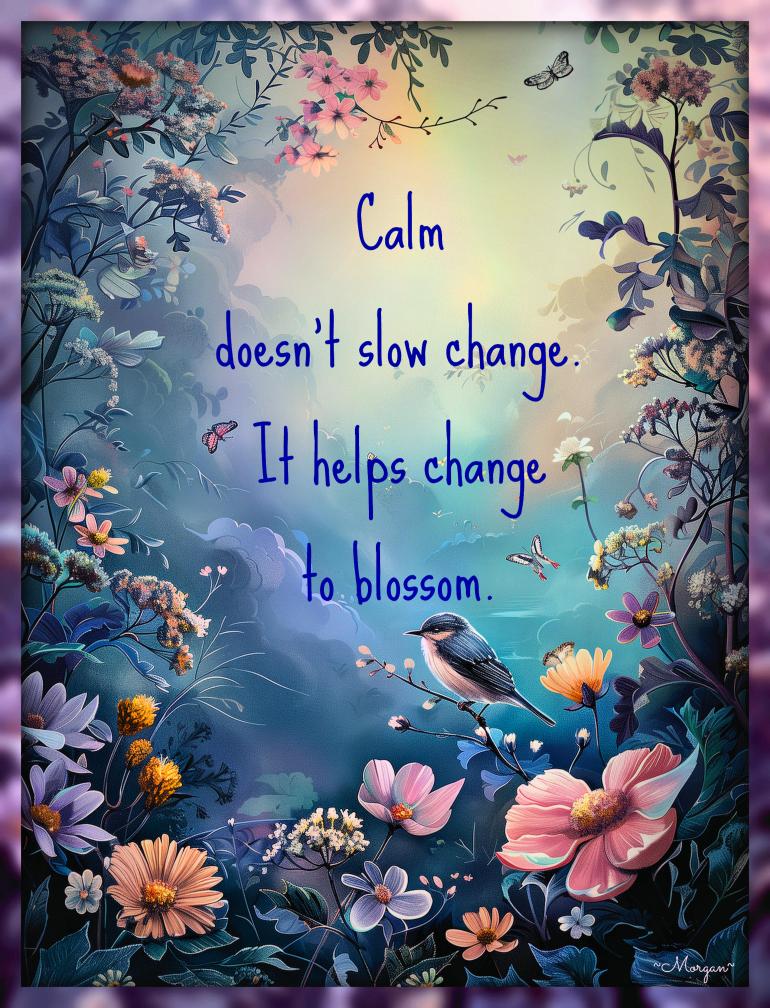
Calm doesn’t slow change.
It helps change blossom and take root.
Memory Is Emotional, Not Historical
When we talk about what the world will remember, we often think in terms of events and outcomes. But memory—especially collective memory—is emotional before it is factual.
People may forget words, but they rarely forget how those words made them feel.
They remember:
-
Who made them feel safe to think
-
Who brought steadiness into uncertainty
-
Who didn’t inflame, but illuminated
Becoming the calm the world remembers isn’t about being visible everywhere. It’s about being consistent somewhere—in conversations, families, communities, creative spaces, and moments that matter.
Calm as a Daily Practice
Calm isn’t a personality trait. It’s a practice—built through small, repeatable choices that may seem insignificant on their own.
-
Pausing before responding
-
Regulating before engaging
-
Returning to the body when the mind spirals
-
Choosing coherence over chaos
Everyone feels stress. Everyone becomes overwhelmed at times. That’s human. What matters is how we respond—and what energy we choose to embody.
The energy we carry is one of the most powerful forces we contribute to the world.
The Power of One, Lived Quietly
There’s a belief that impact must be loud to be real. But some of the most powerful forces in nature—gravity, tides, growth—work without spectacle.
Calm operates the same way.
One regulated presence can shift a room.
One grounded voice can slow a spiraling moment.
One embodied calm can interrupt an entire cycle of reactivity.
This is the quiet truth behind collective change:
systems shift when enough individuals stabilize their own signal.
Change can begin with one person. A single seed can become a tree, and in time, a forest. But lasting change happens faster—and more fully—when many choose to embody steadiness together.
What the World Needs Now
The world doesn’t need more opinions shouted at full volume.
It doesn’t need urgency without integration, or reaction disguised as action.
It needs people who can:
-
Hold tension without amplifying it
-
Stay present without numbing out
-
Act from clarity rather than fear
It needs people who understand that calm is not weakness—it is capacity.
An Invitation
So here is the invitation:
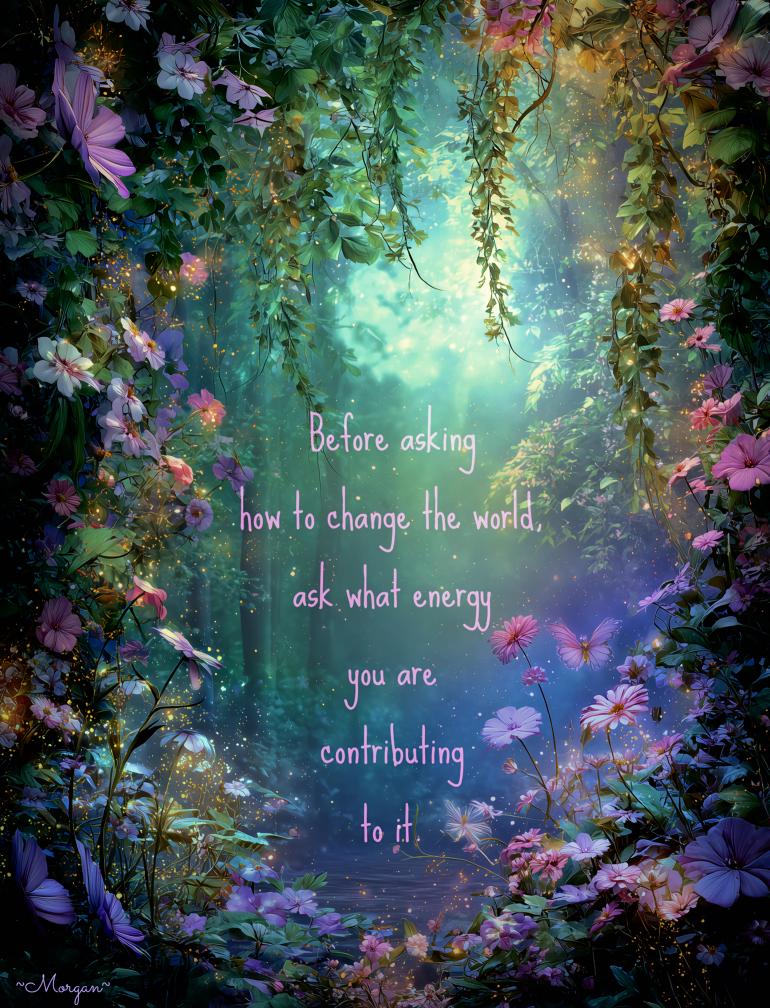
Before asking how to change the world,
ask what energy you are contributing to it.
Before reacting, regulate.
Before speaking, soothe.
Before acting, anchor.
Because you are powerful.
Become the calm you want the world to remember.

If you’d like to continue that journey with me, you’re welcome to subscribe.
~Morgan~
 BooknVolume