

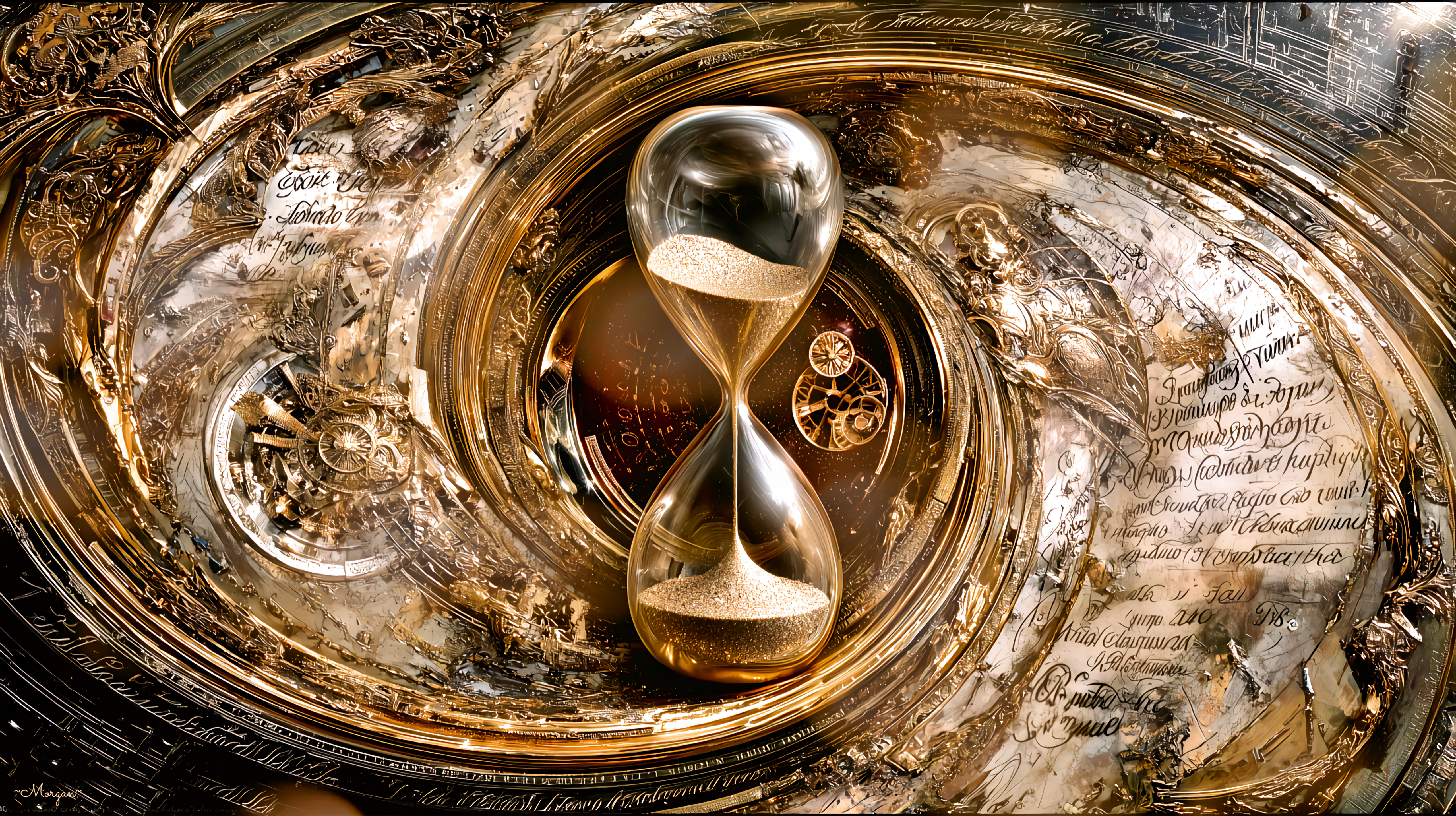
A Moment That Should Have Meant Nothing
It was an ordinary evening. I was sitting in the living room watching TV while my husband played a game on his computer. Nothing unusual. No heightened awareness. No expectation that anything meaningful was about to happen.
And then, suddenly, everything stopped.
The internet froze. His game locked mid-action. My show paused mid-scene. The room fell into a strange kind of silence—the kind where time doesn’t feel like it’s moving forward or backward… just suspended.
And in that pause, something subtle occurred.
Out of the corner of my eye, I noticed a flicker of golden light move across the room in a smooth, linear motion. It wasn’t dramatic or overwhelming. It could have been anything—something easily dismissed.
But because I believe that spiritual interaction is always possible—and because I remain open to it—I simply said, “Hi. If there’s something you want me to know, I’m listening.”
Nothing happened.
No response. No voice. No dramatic follow-up. A moment later, everything resumed. The internet returned, my show continued, and life moved on.
I shrugged it off.
At least… for a while.
The Realization That Came Hours Later
A few hours later, as I was heading upstairs for the night, something shifted.
It wasn’t something I heard. It wasn’t external. It was something I suddenly understood—completely, instantly, and with the clarity of a true “lightbulb” moment.
A realization that felt as though it had been waiting for me to notice it.
Time, as we experience it, isn’t what we think it is.
Why the Past Feels Real—but the Future Doesn’t
Think about the past.
We can remember it vividly. We can feel it, smell it, sometimes even taste it. We revisit it emotionally, often as if it’s happening all over again. Even though it’s no longer our present, it still feels completely real—because we lived it.
We don’t question it. We don’t doubt it. We accept it as fact.
Now consider the present.
The present is immersive. It’s where everything unfolds. It’s where we respond, react, and engage with reality through our senses. Like the past, we don’t question it—we accept it.
But the future?
For most of us, the future feels abstract. Distant. Uncertain.
Not because it’s inherently different—but because we haven’t experienced it yet. We haven’t touched it, heard it, or lived through it, so we’ve been conditioned to believe it isn’t real.
But what if it is?
The Bridge That Changes Everything
This was the realization that shifted everything for me:
Time is irrelevant.
The past and the future are not as different as we tend to believe. Both exist outside of the present moment. Neither is actively unfolding right now. And yet, we accept the past as real without hesitation… while questioning the reality of the future.
Why?
The only true difference is experience.
The past is something we’ve already lived.
The future is something we will live.
Both exist beyond the present—so why should one feel real and the other not?
The Role of Reality in Manifestation and Prayer
Across many spiritual and philosophical traditions, there is a shared idea: aligning with something as already real, rather than waiting for it to arrive.
In Christian scripture, we’re told:
“Whatever you ask for in prayer, believe that you have received it, and it will be yours.”
In Hindu teachings, we’re encouraged to live from a state of fulfillment—acting without attachment and rooting ourselves in inner completeness.
In Buddhism, we’re reminded that reality is shaped by the mind:
“All that we are is the result of what we have thought.”
Hermetic philosophy teaches:
“As within, so without.”
In Kabbalah, the concept of certainty emphasizes knowing—not hoping or wishing.
And in Taoism, alignment replaces force:
when we stop striving, things begin to unfold naturally.
What stands out most is this:
Versions of the same idea appear across traditions, each pointing to the same quiet truth—that the way we hold something internally influences how it unfolds externally.
Shifting From “Wanting” to “Having”
There is a subtle but powerful difference between these two states:
“I hope this happens.”
“I’m grateful this is unfolding.”
One reinforces the absence of something. The other acknowledges its presence.
When we “want,” we emphasize lack. We reinforce the idea that something is missing. And because we tend to embody that state, it becomes the lens through which we experience life.
But when we feel gratitude, we align ourselves with the experience of something already existing.
Science shows that gratitude reshapes the brain and nervous system. It changes how we perceive, respond, and engage with the world. And when our internal state shifts, our lived experience often follows.
This isn’t about pretending. It isn’t about denying reality.
It’s about removing the assumption that the future is somehow less real than the past.
What If the Future Isn’t Distant at All?
What if the future isn’t something we wait for, but something we learn to recognize? What if it only feels far away because we haven’t yet learned how to feel it?
We’ve been conditioned to see the future as something separate—something out there, something approaching, something that hasn’t arrived. It’s framed as distance, measured in time, effort, or uncertainty.
But the past exists in much the same way.
It’s no longer here. It’s no longer unfolding. And yet, we don’t experience it as distant—we experience it as real. We revisit it emotionally. We recall it with clarity. At times, we feel it as though it’s happening again.
So what truly makes the future different?
If gratitude allows us to feel something as already existing, then what we are really doing is collapsing the perceived distance between ourselves and that experience. We are no longer standing apart from the future—we are allowing ourselves to step into the feeling of it.
This isn’t about convincing yourself of something untrue. It’s about recognizing that your experience of reality is shaped, in part, by how you relate to it.
When something feels present—even before it fully materializes—you begin to think and act differently.
Think about preparing for a trip. You plan, you pack, you anticipate. You don’t question whether it will happen—you operate from the expectation that it will. You begin to feel excitement, gratitude, and anticipation long before the experience begins.
You are, in essence, relating to that future as if it is already real.
And because of that, it no longer feels distant.
What Does This All Mean?
This is the heart of it.
When you begin to anticipate—and even feel gratitude—for something that exists beyond your present moment, you shift your relationship with it. You stop viewing it as distant or uncertain, and instead begin to experience it as something already in motion.
And in doing so, you open the door to possibility.

Subscribe to my YouTube Channel The Coherence Nexus
Find my artwork On DeviantArt
Subscribe to my Newsletter
~Morgan~
 BooknVolume