

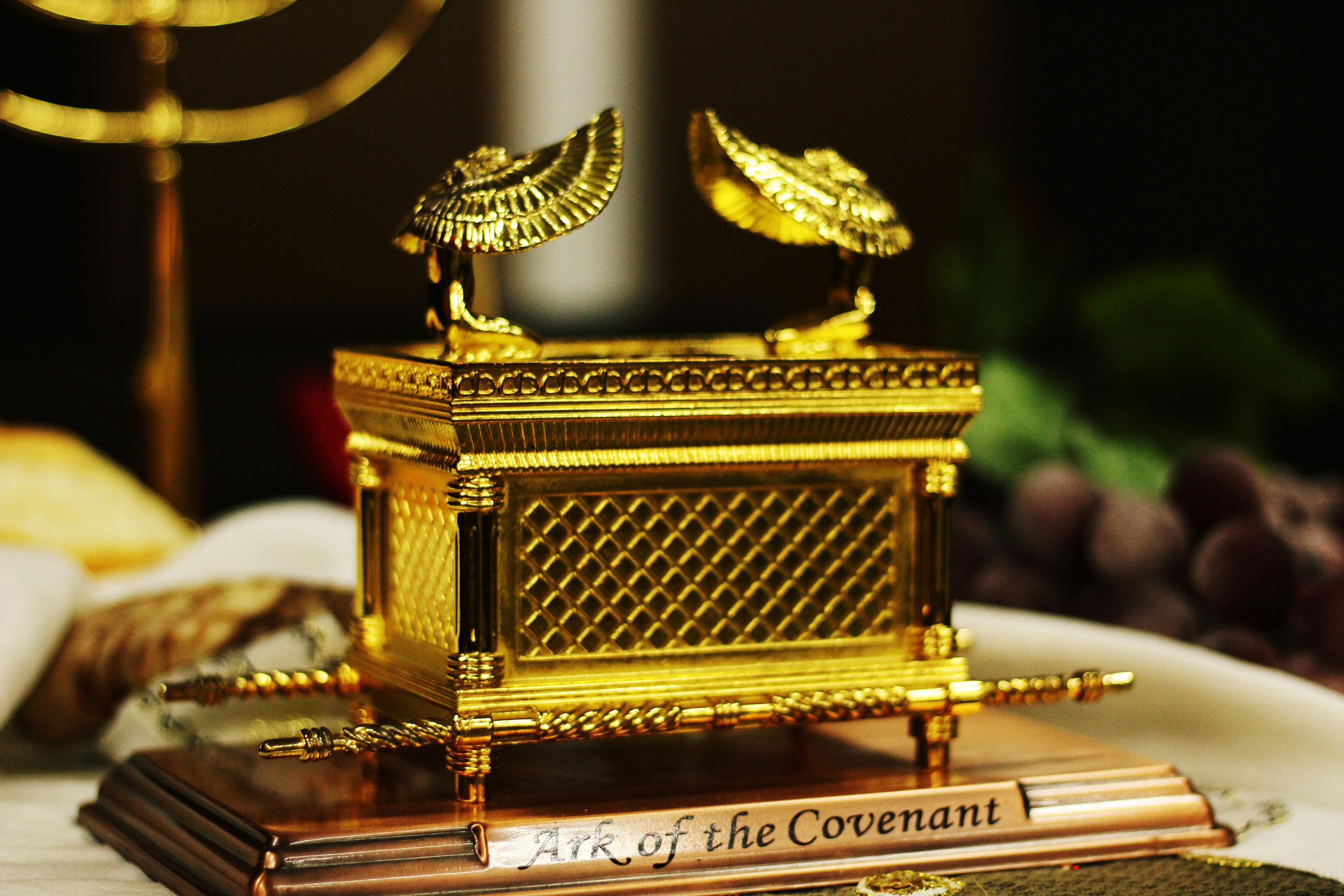
For generations, the Ark of the Covenant has captured the imagination of believers and historians alike. Expeditions have been launched in search of it. Theories have multiplied. Was it destroyed? Hidden? Guarded somewhere beyond our reach? Yet perhaps the greater question is not where the Ark is, but what the Ark meant.
In Scripture, the Ark was far more than a sacred chest. It housed the tablets of the Law and was crafted with meticulous care, yet its significance extended beyond wood and gold. It symbolized covenant. The Hebrew word berit speaks of mutual commitment, not only divine protection but human alignment. It describes a relational bond in which people oriented their lives toward divine wisdom, justice, and reverence. And it may be that we have been searching for the wrong treasure.
What if the Ark was never meant to be recovered as an artifact because its truest power was never confined to its physical form? What if its construction was both practical and profoundly symbolic, a sacred meeting point between heaven and earth, created for a people who needed tangible reassurance in order to trust the invisible? And what if its disappearance reflects not simply historical loss, but spiritual drift? Perhaps it was not hidden beneath stone so much as it faded when humanity began forgetting how to carry covenant internally.
Gold, Wood, and the Language of God
When we read the instructions for the Ark’s construction in Exodus, the detail is unmistakable. The measurements, the acacia wood, the gold overlay, and the cherubim overshadowing the mercy seat all suggest deliberate design. Nothing appears arbitrary. Which invites a deeper question: why would God provide such precise material instructions for something representing divine presence?
Human beings comprehend through symbol. We build sanctuaries and light candles. We kneel in reverence and mark sacred space. Architecture does not contain God, yet it gives us a place to approach Him. Bread and wine remain simple elements, yet they hold mystery. Water is ordinary, yet in baptism it becomes covenantal. Perhaps the Ark functioned in the same way.
It may have served not only as a container for the Law, but as a living lesson. A visible expression of divine alignment. A sacred translation for a people still learning to grasp transcendence. Ancient cultures did not speak of metaphysics in modern terms. They spoke in fire, cloud, stone, and sanctuary. God met them there. And perhaps the Ark was one of those merciful bridges, a convergence of matter and meaning crafted in gold and wood because abstraction alone would not have sustained faith.
If so, the Ark was never only about what it contained. It was about what it cultivated. It gave faith a form and steadied trust. It allowed hope to anchor in something visible while hearts matured toward deeper understanding.

Sacred and Symbolic
To recognize symbolism in Scripture is not to dismiss substance. The Ark was real. It was constructed, carried, revered, and feared. Yet throughout the biblical narrative, physical and spiritual realities intertwine. The Temple reflects heavenly order. The Law written on tablets anticipates the Law written on the heart. Jesus teaches eternal truth through everyday imagery.
God speaks through matter. So perhaps the Ark was both historical and symbolic, tangible and transcendent. It may have been exactly what the text describes while simultaneously pointing beyond itself. Modern thinking often pushes us toward rigid categories, literal or metaphorical, concrete or symbolic. Scripture rarely conforms to such simplicity. The Ark may have embodied both.
Sacred objects often function as thresholds. They ground us in the visible while inviting us into the unseen. They hold mystery until faith deepens. If the Ark was such a threshold, then its disappearance may not mark the end of covenant but a movement inward.
Covenant as Alignment
At the heart of the Ark’s purpose was covenant. The tablets it held were not charms but the terms of relationship, a pattern for living that aligned human life with divine intention. The blessings associated with covenant flowed from that alignment. When Israel walked faithfully, Scripture speaks of peace and provision. When alignment fractured, so did stability. The weakening was not due to the Ark losing power but to the relationship eroding.
What if the Ark’s strength was never located in the object itself, but in what it unified? Shared belief, collective trust, and a people oriented toward God. In that sense, the Ark may have functioned as a focal point of coherence, gathering a nation around divine promise and embodying alignment.
Alignment shapes outcomes not through mysticism, but through lived orientation. When hearts, minds, and actions harmonize with higher truth, communities flourish. Justice strengthens. Peace stabilizes. Perhaps what ancient Israel described as covenant blessing echoes what we now call spiritual coherence. The Ark did not manufacture blessing; it reminded people how to live in a way that allowed blessing to unfold.
As Philippians 4:13 affirms, “I can do all things through Him who strengthens me.” Strength flows from relationship. Symbols alone cannot sustain alignment, but relationship can.

When the Ark Faded from View
The Ark’s departure from Scripture is understated. It does not end in spectacle. It simply disappears as Jerusalem falls and exile unfolds. But the spiritual landscape at that time tells its own story. Leadership faltered. Idolatry grew. Faithfulness weakened. The external symbol vanished as internal alignment deteriorated.
If the Ark was a focal point of covenant, its loss may have reflected deeper fracture rather than caused it. The pattern feels familiar. When societies lose shared spiritual orientation, they often search for substitutes in institutions, ideologies, or movements. Yet beneath the unrest is frequently a quieter erosion of transcendent trust. Perhaps the Ark’s disappearance speaks to every generation that forgets how to carry covenant inwardly. External symbols are vulnerable. Internalized alignment endures.
The Ark Revealed Again
In Revelation 11, the Ark appears within the heavenly temple. Many interpret this as literal restoration. Yet Revelation speaks in imagery and vision, inviting contemplation. What if the Ark’s appearance there signals restoration of covenant rather than rediscovery of artifact?
Jeremiah foretold a new covenant written on the heart, internalized and embodied. If the first covenant was externalized in gold and wood, perhaps the renewed covenant is inscribed in consciousness and community. The Ark revealed in heaven may symbolize alignment restored and relationship renewed. Humanity remembers what was always meant to move from outer form to inner life.
Seen this way, the promise of return is not about excavation. It is about awakening.
Carrying the Covenant Forward
We live in a time overflowing with information yet hungry for unity. We explore psychology, energy, neuroscience, and collective behavior, yet the central question remains unchanged: how do we live in alignment with something greater than ourselves?
Ancient Israel expressed this through covenant language. Faithfulness shaped outcomes. Obedience cultivated peace. Today we may use different vocabulary, but the longing remains the same. If the Ark represented a focal point of alignment, perhaps its disappearance marked a transition rather than a loss. Divine presence was never confined to an object. It was always meant to inhabit hearts.
Restoration, then, is not about locating a relic. It is about remembering relationship. Perhaps our spiritual future does not depend on uncovering what was lost long ago, but on remembering how to carry the covenant within us.
Join the Presence for Peace Event on Facebook

Find my artwork On DeviantArt
Subscribe to my Newsletter
~Morgan~
 BooknVolume
Much food for thought, here, Morgan.
LikeLiked by 1 person
🙂 For me, as well 🙂
LikeLike